Why Mobility Matters More Than You Think for Kids with Disabilities
Last updated: 12/16/2025 Tuesday
Friends on the playground, something fundamental breaks. Not just in the moment, but in how they see themselves in the world.
Most mobility devices treat the body like a logistics problem. What if we flipped that? What if mobility tools were designed around how kids actually want to live: running around, exploring, being part of the action instead of watching from the sidelines?
The Real Cost of Being Left Out
Kids with disabilities face isolation that goes beyond the physical. When playgrounds, schools, and neighborhoods aren’t built with everyone in mind, certain kids get labeled as burdens. That’s a design failure, not a kid problem.
And kids can be ruthless. Being different already sets you apart. Using equipment that screams “medical device” makes it worse. The social cost compounds daily: birthday parties you can’t fully participate in, games you have to skip, friendships that never form because other kids don’t know how to include you.
Your body isn’t cooperating, and now your social life is taking hits too. That’s a lot for anyone to carry, especially when you’re still figuring out who you are.
Movement Changes Everything
Here’s what most people miss: mobility isn’t just about getting from point A to point B. When kids can move, their brains light up differently. They build neural pathways. They develop balance and coordination. They gain confidence that ripples into every other area of life.
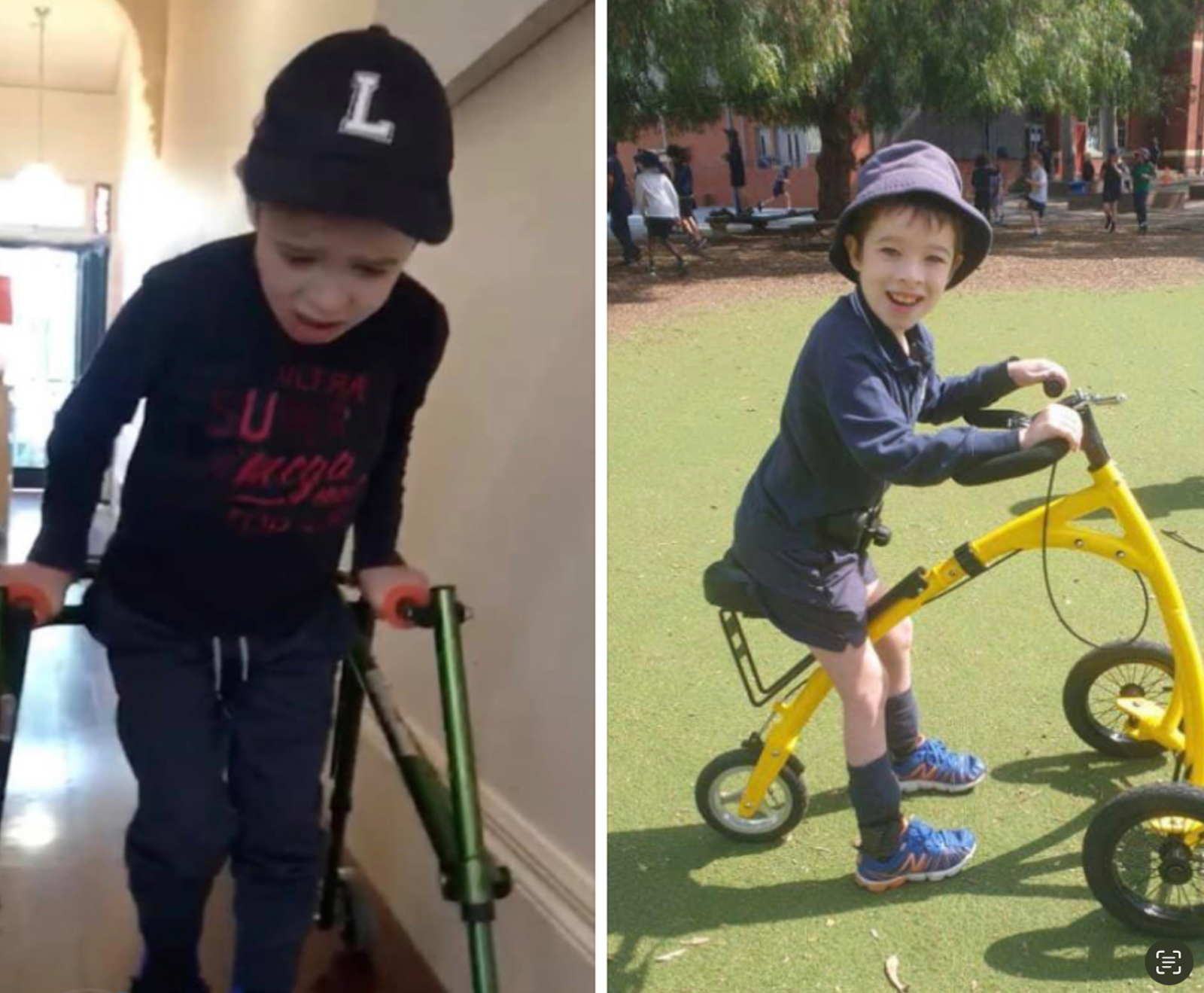
Take a 15-year-old girl who faced a lineup of orthopedic surgeries for her knees and hips. Doctors had scheduled multiple procedures. But after she started using the Alinker walking bike that lets her move at eye level with her peers, something shifted. Those surgeries? Postponed. Some got canceled entirely. Her body responded to consistent, natural movement in ways surgery couldn’t replicate.
Or consider a boy with Leukodystrophy who was headed toward being bedridden. His family got him an early prototype of a kid-sized Alinker XS, and he’s still active today. Still alive, because he can move.
The Equipment Trap Parents Know Too Well
If you’re raising a child with mobility challenges, you know the financial nightmare. Kids grow fast. That specialized equipment you bought last year? Already too small. You’re looking at thousands of dollars annually just to keep up with growth spurts.
Most mobility equipment isn’t designed to grow with your child. You’re stuck in an endless replacement cycle, watching costs pile up while dealing with insurance companies who treat you like a claim number.
What if there was a different approach? Kids with an 18-inch minimum inseam can start using properly designed mobility tools around age 8. With the right adjustable design, they only need two devices maximum throughout their entire childhood. Not a new one every year. Two total.
That’s not just financially sensible. That’s fundamentally different thinking about what mobility equipment should do.
Designing for Life, Not Limitations
The best mobility solutions don’t focus on what’s wrong with your body. They focus on what you want to do with your life. Want to keep up with your friends at the park? Done. Need to navigate school hallways without everyone staring? No problem. Want to move in ways that keep your body strong instead of letting it deteriorate? That’s the whole point.
Eye-level interaction matters more than most people realize. When you’re seated at the same height as everyone around you, conversations happen naturally. You’re not looking up at people. They’re not looking down at you. That shift in perspective changes the entire social dynamic.
Rethinking What’s Possible
Mobility tools designed with joy and inclusion at the center change outcomes. They keep kids active, reduce the need for invasive procedures, and create opportunities for connection.
Your child deserves to be in the middle of the action, not watching from the edges. Learn more about the unique mobility solutions designed for how kids want to live at www.thealinker.com