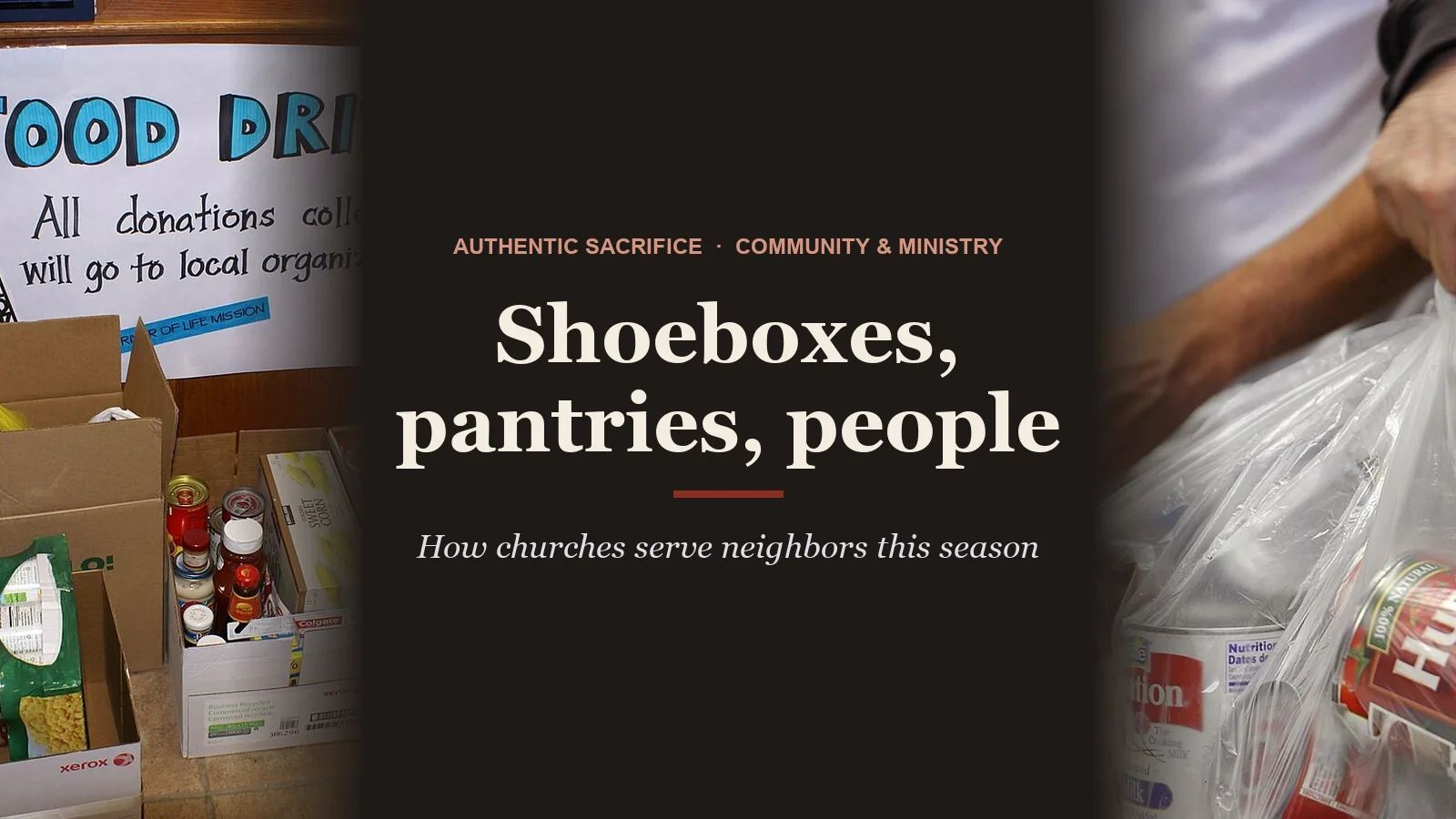
How Churches Serve Their Communities This Season
Picture a church fellowship hall on a Thursday night in November. Folding tables are lined with empty shoeboxes, and a retired teacher is showing a second-grader how to fit a toothbrush, a pack of crayons and a stuffed bear into one small box.
In the next room, two volunteers are counting canned goods for the food pantry. The shelves are thinner than they were last year. One of them looks at the sign-up sheet and frowns. There are more needs than names.
Quick answer
This season, churches serve their communities through programs like Operation Christmas Child, whose National Collection Week runs Nov. 16–23, 2026, along with food drives, Thanksgiving meals and GivingTuesday on Dec. 1. The most effective efforts partner with local food banks and ministries, meet real needs, and keep serving after the holidays end.
Key takeaways
- Operation Christmas Child's National Collection Week runs Nov. 16–23, 2026.
- Feeding America says nearly 48 million people, including 14 million children, faced food insecurity in 2024.
- GivingTuesday falls on Dec. 1, 2026, five days after Thanksgiving.
- Partner with local food banks instead of duplicating their work.
- Serving well means treating every neighbor with dignity, during and after the holidays.
The busiest serving season of the church year is here. Over the next four weeks, congregations across the country will pack shoebox gifts, stock food pantries, serve Thanksgiving meals and rally donors for year-end giving.
Here are the key dates, what each effort involves and how to take part, whether you belong to a church or not.
What community service dates should churches know this season?
| Date (2026) | What’s happening |
|---|---|
| Before Nov. 16 | Pack Operation Christmas Child shoebox gifts and find a drop-off site |
| Nov. 16–23 | Operation Christmas Child National Collection Week |
| Thursday, Nov. 26 | Thanksgiving Day, a peak time for community meals and food drives |
| Tuesday, Dec. 1 | GivingTuesday |
What is Operation Christmas Child National Collection Week?
Operation Christmas Child is a project of the Christian relief organization Samaritan’s Purse. Volunteers fill shoeboxes with gifts for children, and the boxes are delivered to boys and girls in more than 100 countries, according to Samaritan’s Purse.
In 2026, National Collection Week runs Nov. 16–23. During that week, churches and other sites serve as drop-off locations where families can bring packed boxes. Samaritan’s Purse offers a drop-off location finder on its site, and it also lets donors build a shoebox online.
The ministry suggests a $10 donation per box to cover “shipping, processing, ministry partner training, and Gospel materials.” Many churches collect that donation along with the boxes.
What goes inside matters. Samaritan’s Purse’s gift suggestions page recommends a “wow” item, such as a soccer ball with a pump or a stuffed animal, plus personal care items, school supplies, clothing and small toys. It also lists items not to include, such as candy, toothpaste, liquids and medications. Soap is no longer allowed “because of the complications it causes in customs in some nations.”
Drop-off hours vary by site, so check your local location before you go.
Why do church food drives matter so much this year?
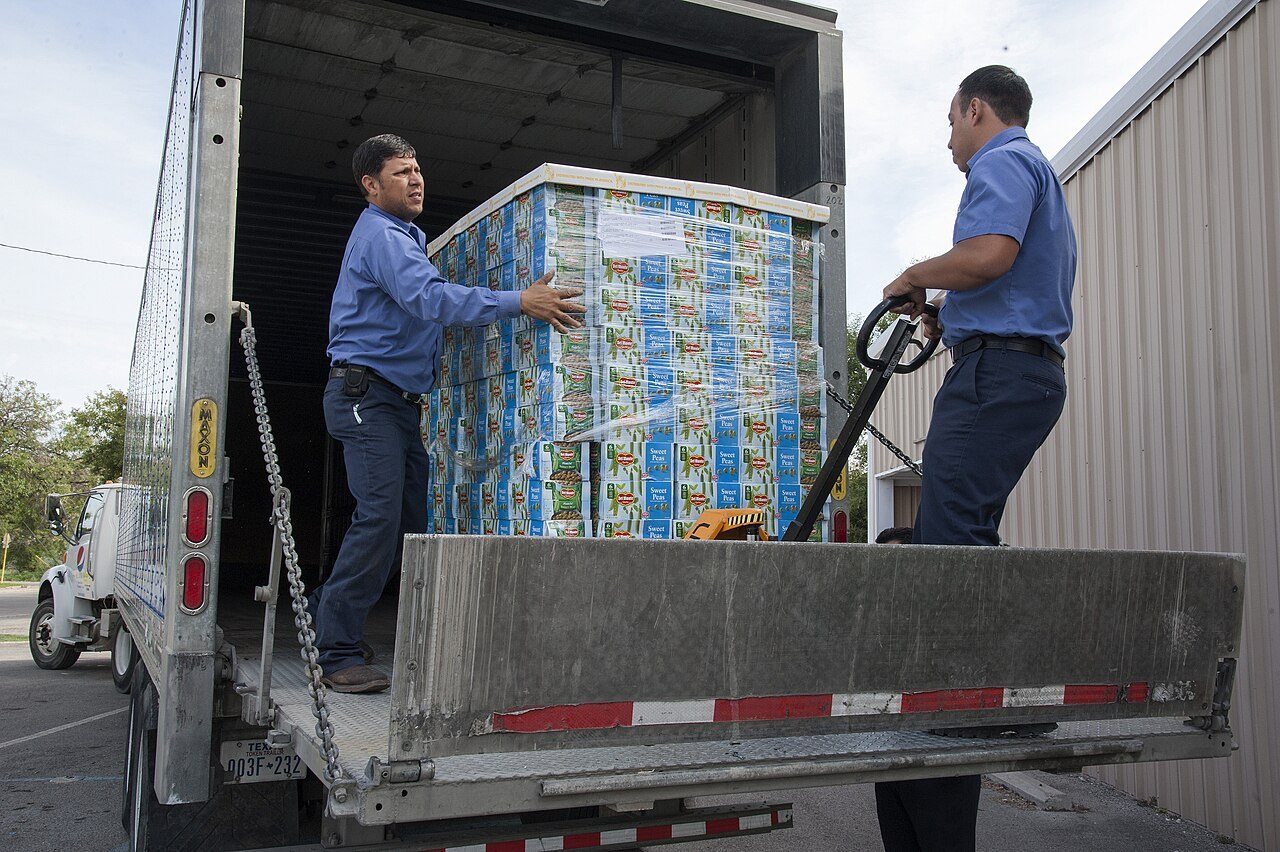
Because the need is everywhere. Feeding America’s Map the Meal Gap 2026 study, released July 28, 2026, found that “nearly 48 million people, including 14 million children, experienced food insecurity in 2024,” based on USDA figures. The study found people facing food insecurity in every county and congressional district in the country.
Many of those families fall through the cracks of public help. According to Feeding America, about 25 million people, nearly half of everyone facing food insecurity, had incomes too high to qualify for federal nutrition assistance. That is often where church pantries and community meals step in.
Feeding America also notes that USDA has stopped collecting food security data, though the organization says it will keep estimating local need. For churches, that makes relationships with local food banks even more important for knowing what neighbors need.
How can a church serve its community well this season?
Good intentions are a start. Wise service goes further. Here are practical steps any congregation can take:
- Partner before you plan. Use Feeding America’s food bank locator to find your regional food bank, then ask what they need most. Partnering usually stretches every donation further than starting from scratch.
- Ask, don’t assume. Talk with school counselors, shelters and local ministries about real gaps in your area, from coats to rides to grocery cards.
- Serve with dignity. Let families choose their own items when possible. Learn names. Sit down and eat with guests at community meals.
- Include the kids. Packing a shoebox or sorting cans teaches children that faith shows up in action.
- Plan for January. Food pantries often get attention in November and December. Put a February food drive on the calendar now.
“The King will reply, ‘Truly I tell you, whatever you did for one of the least of these brothers and sisters of mine, you did for me.’”
Matthew 25:40 (NIV)
Year-end generosity has its own date, too. GivingTuesday falls on Dec. 1, 2026, the Tuesday after Thanksgiving. The global movement began in 2012, and many churches and ministries use the day to invite gifts of time and money for local work.
Service also shapes the people who serve, as we explored in why serving others changes the giver. Our story on a record-setting holiday toy drive in Los Angeles shows what happens when a community decides to show up together.
What does the Bible say about serving your neighbors?
Jesus made care for people in need central to following him. In Matthew 25:35-36 (NIV), he says, “For I was hungry and you gave me something to eat, I was thirsty and you gave me something to drink, I was a stranger and you invited me in, I needed clothes and you clothed me, I was sick and you looked after me, I was in prison and you came to visit me.”
James is just as direct. “Suppose a brother or a sister is without clothes and daily food,” he writes in James 2:15-16 (NIV). “If one of you says to them, ‘Go in peace; keep warm and well fed,’ but does nothing about their physical needs, what good is it?”
And Isaiah 58:10 (NIV) offers a promise: “if you spend yourselves in behalf of the hungry and satisfy the needs of the oppressed, then your light will rise in the darkness, and your night will become like the noonday.”
For a deeper look at the principles behind this kind of service, see our practical guide to Christian social teaching.

How can you help if you don’t belong to a church?
You don’t need a membership card to serve. Most church-hosted shoebox drop-offs, food drives and community meals welcome volunteers and donors from the neighborhood. Call the church office, ask what they need and show up when you say you will.
You can also pack a shoebox with your family, volunteer at your regional food bank or give on GivingTuesday to a ministry you trust.
Back in that fellowship hall, the second-grader tapes the lid on her box and fills out the label for a girl her own age in careful letters. A few days later, the frowning volunteer checks the sign-up sheet again. Three new names have appeared, all from families who came to drop off a box and decided to stay. That is how most community ministry grows: one table, one box and one new pair of hands at a time.
Share your story
Is your church packing shoeboxes, running a pantry or serving a Thanksgiving meal this year? Tell us how faith shows up in service in your community. Your story could be the nudge another congregation needs.
Frequently asked questions
When is Operation Christmas Child shoebox drop-off week in 2026?
Operation Christmas Child's National Collection Week in the U.S. runs Nov. 16–23, 2026, according to Samaritan's Purse. Drop-off hours vary by location, so check your local site before you go.
What should you not put in an Operation Christmas Child shoebox?
Samaritan's Purse says not to include items such as candy, toothpaste, liquids, medications or soap. It says soap can cause complications in customs in some nations. Its gift suggestions page lists the full set of items to avoid.
How much does it cost to send an Operation Christmas Child shoebox?
Samaritan's Purse suggests a $10 donation per shoebox to help cover shipping, processing, ministry partner training and Gospel materials. The cost of the items inside depends on what you choose to pack.
What do food pantries need most during the holidays?
Needs vary by location, so the best step is to call your local pantry or regional food bank and ask. Local partners can tell you exactly what is running low and whether volunteers, food or funds would help most.
How can a small church serve its community?
Start with one partnership instead of many programs. Small churches can host a shoebox drop-off, support a local food bank, serve a monthly meal, or adopt a nearby school's needs. Consistency matters more than size.
Sources
- Samaritan's Purse: Operation Christmas Child
- Samaritan's Purse: What Goes in My Shoebox? Gift Suggestions
- Feeding America: Map the Meal Gap 2026 press release
- Feeding America: Find Your Local Food Bank
- GivingTuesday
- Bible Gateway: Matthew 25:35-40 (NIV)