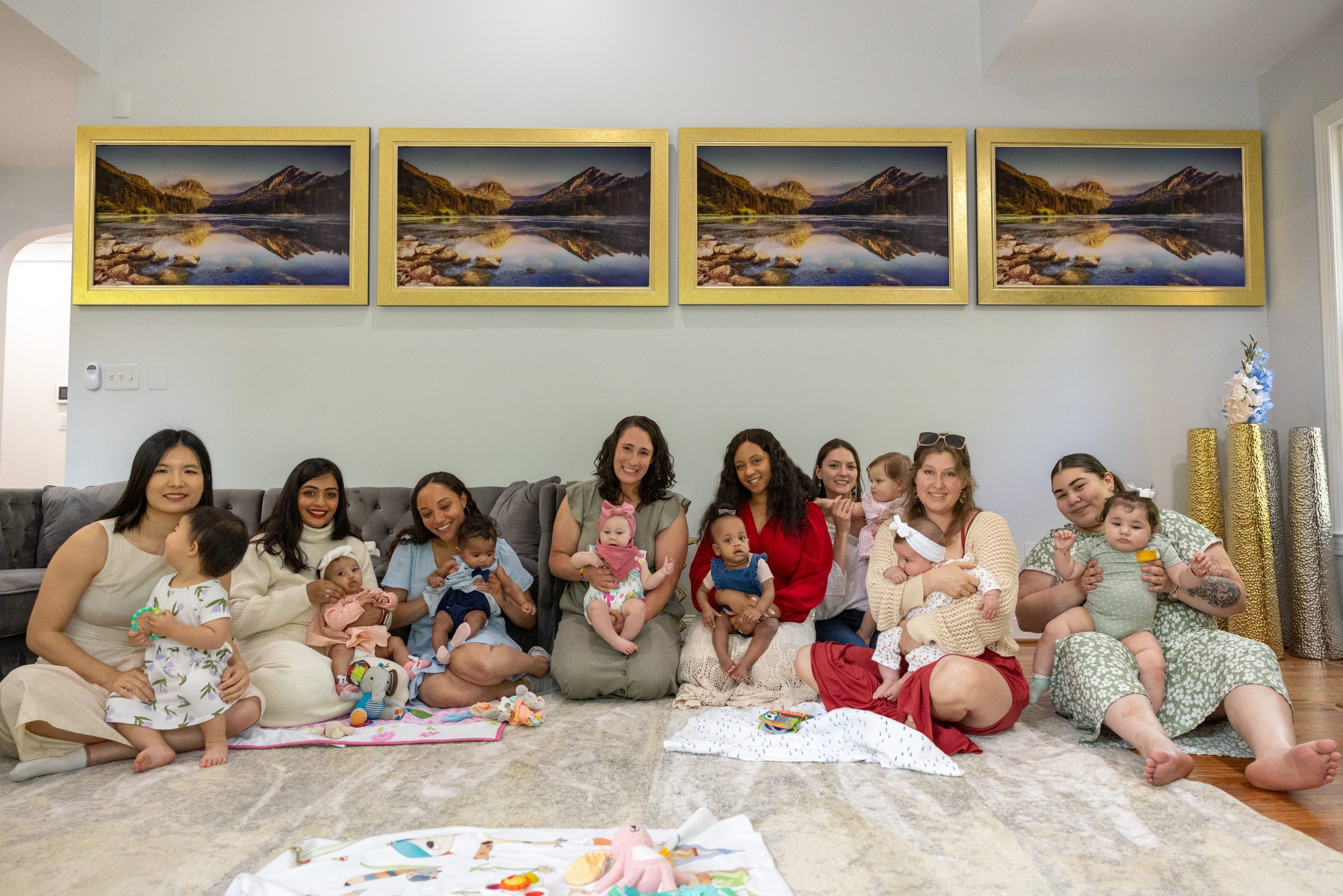
The Faith of Lois and Eunice: A Sacred Naming Tradition Restored for Mothers and Daughters
Scripture treats a name as something sacred. The name a mother gives her daughter carries identity, inheritance, and a quiet line of faith stretching across generations.
That principle has a quiet new champion. Dr. Tamara Nall, founder and CEO of Junia, has just announced the Mother’s Day rollout of a recognized naming tradition for mothers who want to pass their name to their daughters. The tradition uses the “Jn.” suffix as the feminine equivalent to “Junior,” and it gives Christian families the language, ceremony, and registry that mainstream culture has been missing for centuries.
The name itself comes from Junia of Romans 16:7, a prominent female apostle in early Christianity whose leadership Paul recognized in the closing greetings of his letter to the Roman church. Dr. Nall built the entire tradition on that biblical foundation. The Certificate of Junia gives families a tangible record of the inheritance. The Junia Naming Ceremony provides a ritual format families can hold privately or in their faith community. The Junia Registry connects mothers and daughters across the world who have chosen this path. National Junia Day, set for March 1, anchors an annual moment around the tradition.
For Christian mothers and daughters, the resonance runs deeper than a Mother’s Day choice. It touches a biblical pattern Scripture has been recommending all along.
The Apostle Named Junia: Where the Tradition Begins
Romans 16:7 contains a name many Christians have read past for years. Paul writes, “Greet Andronicus and Junia, my fellow Jews who have been in prison with me. They are outstanding among the apostles, and they were in Christ before I was.”
Junia is named there as a woman of significant standing in the early church. Her leadership was recognized at the time. Translators and editors over the centuries softened or obscured her identity, sometimes rendering her name as Junias and reassigning the gender. Modern scholarship has restored the original reading. Junia was a woman, an apostle, and a leader Paul honored by name.
Dr. Tamara Nall built the entire matriarchal naming tradition on that biblical foundation. The choice of name was deliberate. Junia stands as a reminder that female leadership and authority are part of the Christian story from the earliest pages of the New Testament. Mothers who participate in the Junia tradition are stepping into a lineage of recognized female faith that has existed for two thousand years.
That biblical foundation gives the tradition a depth rooted in two thousand years of Christian witness.
What Lois Passed to Eunice: The Generational Pattern Already in Scripture
In his second letter to Timothy, the apostle Paul names a chain of faith that has shaped Christian thinking about generational legacy for centuries. “I am reminded of your sincere faith,” Paul writes in 2 Timothy 1:5, “which first lived in your grandmother Lois and your mother Eunice and, I am persuaded, now lives in you also.”
Three generations. Two women. One sincere faith carried from Lois to Eunice to Timothy, named in Scripture so the church would remember.
That verse is the biblical pattern the Junia tradition makes visible. Lois passed something to Eunice. Eunice passed something to Timothy. Each generation honored the one before by carrying forward what mattered most. Names function the same way in Scripture, from the genealogies of Genesis to the promise of new names in Revelation. A name in the Bible is a vessel of identity, calling, and inheritance.
For Christian mothers, the Junia tradition gives shape to a pattern Scripture already commends. The “Jn.” suffix is a quiet, public way of saying that what a mother carries is worth passing down with her name attached. A mother named Eunice can name her daughter Eunice Jn., and the lineage becomes visible in a way generations of Christian women have rarely been able to express formally.
The faith that dwelt in Lois and Eunice has always been worth passing forward. The Junia tradition gives mothers a recognized way to do it.
A Good Name More Desirable Than Riches: Why This Tradition Matters Now
Proverbs 22:1 sets a standard most modern conversations about Mother’s Day skip past entirely. “A good name is more desirable than great riches,” the verse reads. “To be esteemed is better than silver or gold.”
That principle reframes what Mother’s Day can be. Flowers fade. Brunch tabs vanish. Jewelry ends up in a drawer. A name passed down with intention has the kind of staying power Scripture has been pointing to for three thousand years.
Dr. Nall described the timing of the announcement in clear terms when Junia launched. “Mother’s Day is a moment to reflect on what remains when we are gone,” she said. “For generations, daughters have been left out of one of the most powerful acts of legacy, the passing of a name. Junia changes that.” For Christian families who already understand legacy as something built across generations, the framing lands immediately.
Many mothers walking through fertility challenges, adoption journeys, or other paths to motherhood have wondered what their own legacy will look like. The Junia tradition offers a framework that does not depend on any single circumstance. Legacy beyond biology is the language Junia uses, and for Christian families it echoes what Scripture has affirmed all along: legacy is cultural, spiritual, and intentional, carried in the names and the faith handed down across generations.
A name passed down with reverence is one of the most enduring gifts a mother can give.
A Naming Tradition Built for Stewardship Across Generations
The Junia tradition gives families three formal pieces that turn a private decision into a recognized act of legacy.
The Certificate of Junia provides a tangible record of the name being passed down. Many Christian families already keep baptismal certificates, family Bibles, and dedication records as part of their household heritage. The Certificate of Junia takes its place alongside those documents as a witness to a sacred decision made in love.
The Junia Naming Ceremony offers a ritual format families can hold privately, in their home, or as part of a larger gathering at their church. Ceremonies have always carried weight in the Christian tradition. They mark the moments when something invisible becomes visible to a community of witnesses. A mother formally passing her name to her daughter, in front of family and friends, becomes a moment the entire community remembers.
The Junia Registry connects mothers and daughters globally who have chosen this path. Families who join the registry become part of a growing community of believers and intentional mothers who share stories, photographs, and resources around National Junia Day on March 1. Stewardship of a tradition requires community. The registry provides exactly that.
Each piece exists to make the practice durable. The certificate, the ceremony, and the registry give a Christian family the formal infrastructure to carry the tradition forward across generations.
For Christian families committed to stewardship across generations, the Junia tradition offers infrastructure that makes the work easier to carry forward.
Why This Matters for Communities of Faith
There is a quiet truth in Christian life the church has not always said out loud. The faithful work of mothers, the daily formation of children, the prayers whispered over cribs and homework and Sunday dinners, has rarely received the cultural recognition it deserves.
Scripture knows the work. Proverbs 31 names it. The story of Hannah names it. The Magnificat of Mary names it. The faith of Lois and Eunice names it. Yet for centuries, mainstream culture has offered fathers a recognized suffix for passing on their names. Mothers carrying out the same act of legacy have walked through cultural ambiguity without comparable language, ceremony, or registry.
The Junia tradition closes that gap with the same reverence Scripture has always brought to it. The “Jn.” suffix functions as the feminine equivalent to “Junior,” giving Christian mothers and daughters the same generational honor fathers and sons have always received. The biblical foundation in Romans 16:7 anchors the practice in something older than any cultural trend.
For communities of faith, the Junia tradition gives concrete form to what Scripture has always affirmed. Mothers and daughters are the authors of generational narratives. Names carry inheritance worth honoring. What a mother passes down to her daughter belongs in the visible record of the family of God.
The work was always sacred. The recognition is finally catching up.
Frequently Asked Questions
What is the Junia naming tradition? The Junia naming tradition is a formal practice that gives mothers a recognized way to pass their own name to their daughters using the “Jn.” suffix. It functions as the feminine equivalent to “Junior” and provides Christian families with the certificate, ceremony, and registry that support the tradition. Dr. Tamara Nall founded the cultural movement in honor of Junia of Romans 16:7, the female apostle Paul named in his letter to the Roman church.
Who was Junia in the Bible? Junia is named in Romans 16:7 as one of the apostles in the early Christian church, a woman Paul greeted with honor in the closing of his letter to the Romans. Some translations across the centuries softened or obscured her identity, sometimes rendering the name as Junias. Modern scholarship has restored the original reading: Junia was a woman, a leader, and a person of significant standing in the early church.
What does the “Jn.” suffix mean for a Christian family? The “Jn.” suffix is the formal marker that signals a daughter has been named after her mother in the Junia tradition. A Christian mother named Eunice, for example, would name her daughter Eunice Jn., placing the suffix in the same position “Jr.” occupies for sons. The marker can appear on birth certificates, school records, and family documents, giving the tradition the same legibility as the “Junior” convention.
How does the Junia tradition fit with biblical teaching on legacy? The Junia tradition reflects a pattern Scripture commends throughout its pages. Second Timothy 1:5 names the chain of faith from Lois to Eunice to Timothy as something worth remembering. Proverbs 22:1 calls a good name more desirable than great riches. Christian families who choose to pass down a name with intention are participating in a biblical understanding of legacy as something built across generations, carried in identity, and rooted in faith.
Who is Dr. Tamara Nall? Dr. Tamara Nall is the founder and CEO of Junia and a former strategy consultant at Booz & Company. She built the cultural movement during a personal season shaped by fertility challenges, grief after a mother’s loss, and a search for what endures, drawing from her faith. Her work has positioned her as a leading voice on matriarchal naming, feminine legacy, and intentional cultural tradition for mothers and daughters.
A Sacred Tradition Worth Restoring
Some traditions go missing for centuries before someone notices the absence and builds them back. The Junia tradition is one of them. The work of restoring it falls to mothers, daughters, and communities of faith who recognize what Scripture has always known. Names matter. Mothers carry honor worth passing down. The line of faith from Lois to Eunice to Timothy was never meant to stop with one generation.
For Christian families looking for a Mother’s Day choice that holds its meaning across generations, the Junia tradition offers an answer rooted in Scripture and built for the long arc of family life. Ceremony resources, the Certificate of Junia, and registration in the Junia Registry are available at junialegacy.com.
A name carried forward in love is one of the oldest gifts a mother can give. The Junia tradition simply makes it visible again.