Getting Back Outside: Why Mobility Challenges Don’t Have to End Your Outdoor Life
You used to love going on hikes. Or maybe you just liked taking your dog for a walk in the afternoon, or to spend your Saturday morning at a cafe, taking in the view. Then came the diagnosis, the slow changes, the pills, walking got harder and now all that seems like another life. But it doesn’t have to be this way.
Managing a mobility condition doesn’t mean you have to give up the things you love forever. The barriers keeping you inside the house aren’t as permanent as they appear, and you can go back to enjoying nature and fresh air the way you used to with the proper measures. Here’s how.
The Importance of Being Outdoors
Before we get to the hows, we need to establish a why. Why do you want to be outdoors? And the answer, or at least the most objective one, is that getting outside isn’t some luxury activity you can easily replace.Research consistently shows that time in nature provides mental health benefits you simply can’t replicate anywhere else.
People with mobility challenges already face higher rates of depression and social isolation and a lack of outdoor access only adds to this vulnerability. The issue is bigger than just being cut off from a pleasant activity. You’re cut off from a proven source of stress relief, mood improvement, and psychological wellbeing.
The smell of fresh air, the sound of wind through trees, natural light on your face, those are all fundamental sensations that make you connected to the world around you.When you lose access to nature, you lose a piece of your identity.
On Accessibility
Although the importance of nature in mental health is well established, the unfortunate fact is that most outdoor spaces are still not properly optimized for accessibility. Trails have steep grades, uneven surfaces, narrow paths and there are still a lot of parks where the stairs are without ramps, the design goes for gravel instead of pavement, long distances between rest areas, etc.
Even places that do claim to be “accessible” often fall short. Too often people dealing with mobility impairment will research a spot in advance and read how a trail has accessibility support only to get there and find that boardwalks that end out of nowhere, forcing them to go back the way they came.
This creates a terrible negative feedback loop. You try to get outside, encounter barriers, feel discouraged, and eventually stop trying. Each failed attempt makes the next one harder to initiate, which is tragic because this is not a flaw on your part, it’s the environment that’s failing you.
Rethinking Outdoors Access
When we talk about outdoor time, our first thought is that we’re going on a serious hiking trail, tracking through rivers, lighting campfires, an adventure, but that’s a narrow definition that excludes most people, disabled or otherwise.
Sometimes, being outdoors can take the form of sitting on your porch, watching birds, or taking a stroll through your own neighborhood, things that might not raise your adrenaline level, but certainly count for your mental and emotional health.
Trying to match what you used to do, or what other people do, isn’t a healthy or even useful path. You want to find ways to be in a natural setting that work for your current abilities while still bringing you joy.
So instead of that five mile hike you used to do, why not go through a paved park loop with benches every quarter mile? There’s no failure in adapting to your current reality. You’re still getting outside, still experiencing nature, still reaping the mental health benefits.
The Right Support
Paradoxically, traditional mobility aids are more a liability than genuine support in outdoor settings since most of them are designed for smooth indoor surfaces. Standard wheelchairs struggle with grass, gravel, and uneven surfaces. Walkers sink into soft ground. Canes slip on wet leaves.
Naturally, that doesn’t mean you have to forego the idea of having some kind of support, but it needs to be designed with some adaptability in mind. Look for these features when thinking about outdoor access:
Terrain capability: Can your mobility aid handle grass, packed dirt, gentle slopes? Does it work on boardwalks and paved paths? Knowing what surfaces you can navigate opens up which outdoor spaces become available to you.
Stamina extension: The right support should let you go farther than you could unassisted. If your mobility aid exhausts you as much as walking unsupported, it’s not doing its job for outdoor use.
Weather resilience: Will your device work in light rain? Can you use it when paths are slightly damp? Outdoor access means dealing with real-world conditions, not just perfect weather.
Starting Small
You don’t have to commit to huge outdoor ventures right away. Pick one accessible space near you and get used to being there regularly.
It could be a neighborhood with sidewalks and interesting gardens, or a nature center with accessible boardwalks. Go there at different times of day. Notice what changes. Build a relationship with that space.
Once you feel confident enough, start expanding. Research accessible trails in your area. Look for parks that have made genuine accessibility improvements and connect with local groups that organize outdoor activities for people with mobility challenges. Many communities now have adaptive outdoor programs, and these might offer group hikes with specialized equipment, accessible nature photography workshops, or supported outdoor excursions. Don’t hesitate to ask about accommodations or bring your own mobility device that works for you.
Getting Back Out There
People who manage movement-impairing illnesses have just as much need for grass over their feet and sun in their skin as anyone else, sometimes even more so, which makes the movement of reclaiming these spaces more than a mere nice-to-have.
For many, it’s the opportunity to take back a piece of who they were, or to forge a new identity out of a hardship overcome. Therefore, it’s not only important to incentivize their efforts but to aid in removing all barriers to it.
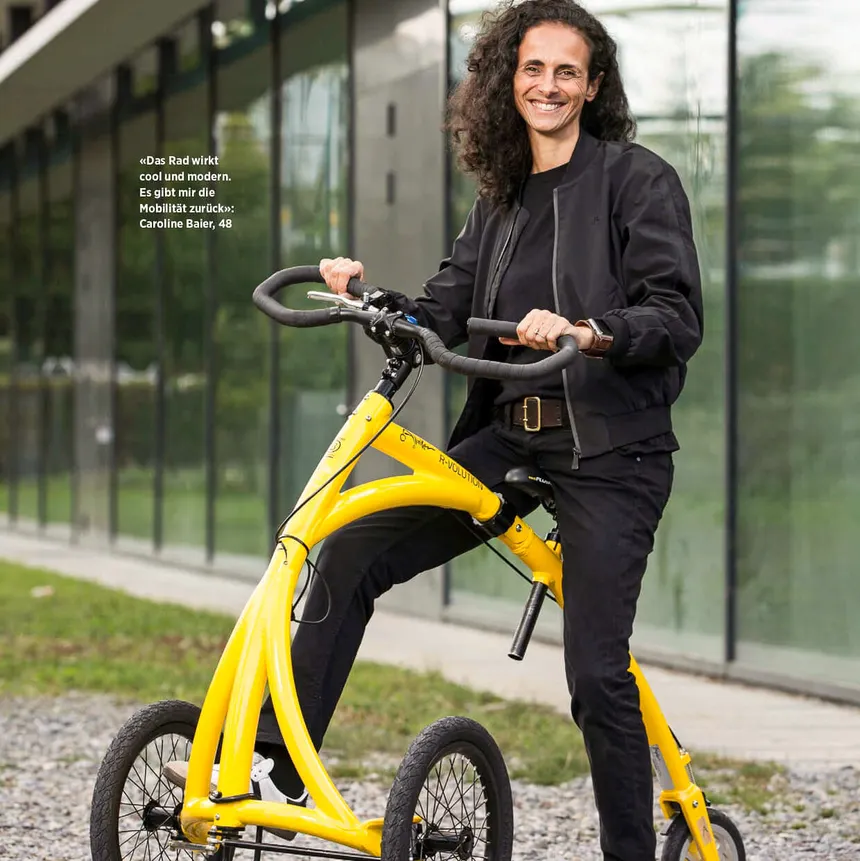
The Alinker was designed with outdoor capability in mind, stable on varied terrain, built for real-world conditions, and able to take you beyond perfectly smooth paths. Learn more about getting back outside www.thealinker.com.